
How to Choose Weight Plate Storage
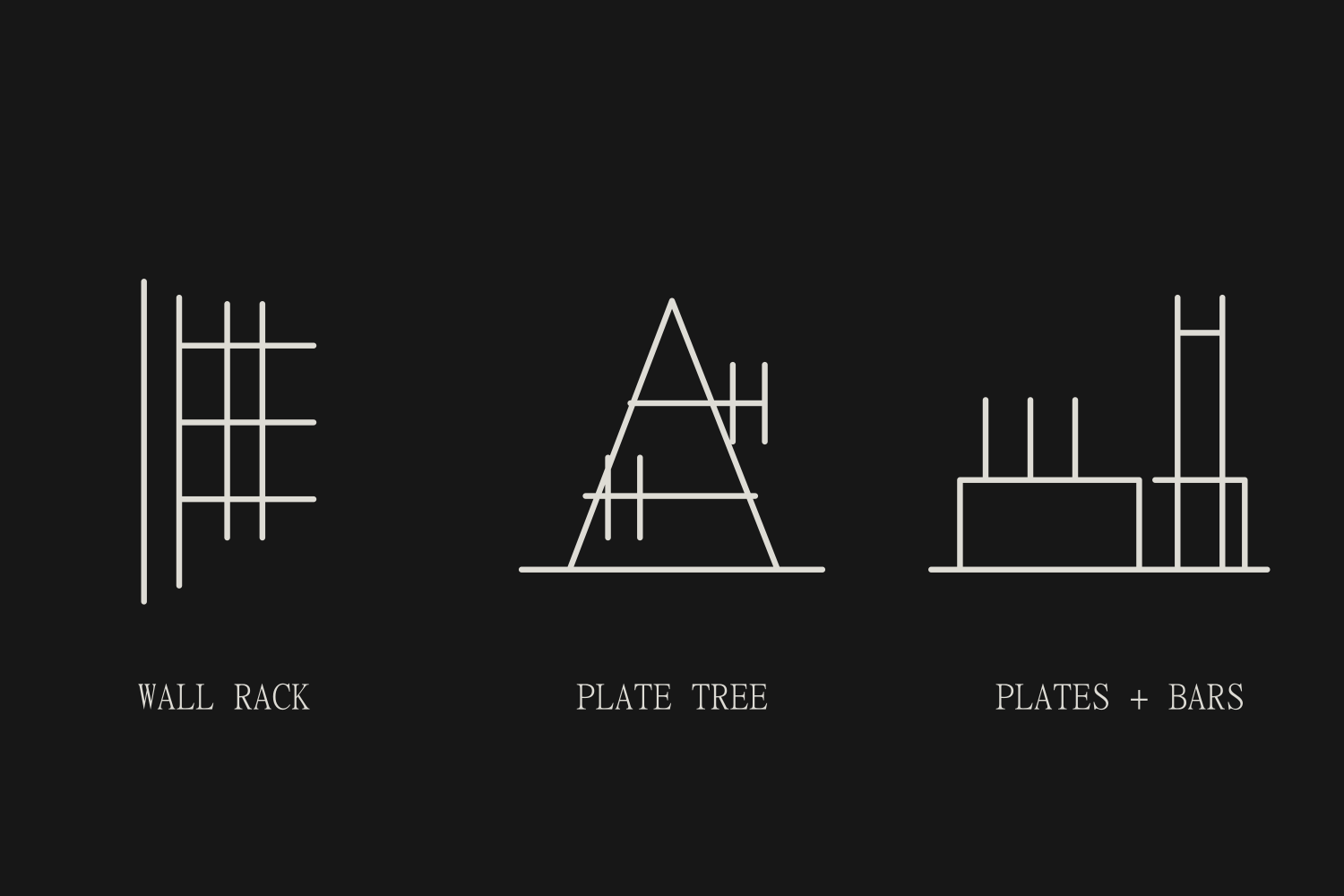
Work out whether wall storage, a freestanding tree or a combined bar-and-plate rack fits your plates and your room.
By IRONINDEX · How we research
Introduction
Plate storage is easiest to plan from the plates it needs to hold. Their bore, outside diameter, thickness and total weight determine what fits on the pegs and how much room is needed to lift each plate clear.
A wall rack leaves floor space beneath it but depends on a suitable wall and fixings. A freestanding rack occupies a footprint, and a combined rack needs extra access for the bars it stores.
What to consider
- 01
Bore and peg diameter
The peg needs to fit the plate bore. A general Olympic compatibility claim is a useful starting point, with exact dimensions helpful when the fit is close.
- 02
Plate size and spacing
The largest plate’s outside diameter can make neighbouring pegs hard to use. Stack thickness and the usable part of each peg determine how many plates fit along it.
- 03
Per-peg and total load
A rack can have limits for individual pegs as well as the whole frame. The proposed load needs to fit each applicable limit.
- 04
Walls, floors and access
A wall-mounted rack depends on the wall and approved fixings. Freestanding storage needs room for the base and for plates or bars to be lifted clear.
Buying advice
Wall-mounted, freestanding and combined storage
A wall rack can place a stack close to the lifting area, provided the mounting location and fixings are suitable. Where fixing or load information is missing, the manufacturer and a competent installer can establish what the wall and installation can support.
A freestanding rack can go where plates are easiest to reach. A combined holder saves a separate bar storage position, but vertical bar holders need room above them to lift the bars free.
How the plates fit on the pegs
A simple storage plan pairs each peg with a stack. It needs the stack’s weight and thickness, the widest plate in it, and enough clearance to remove the plate next to it. A published peg depth may include parts of the peg that a plate cannot use.
Catalogue examples
Use these specification profiles to apply the checks above. They are not hands-on reviews, rankings or a confirmed compatible package.
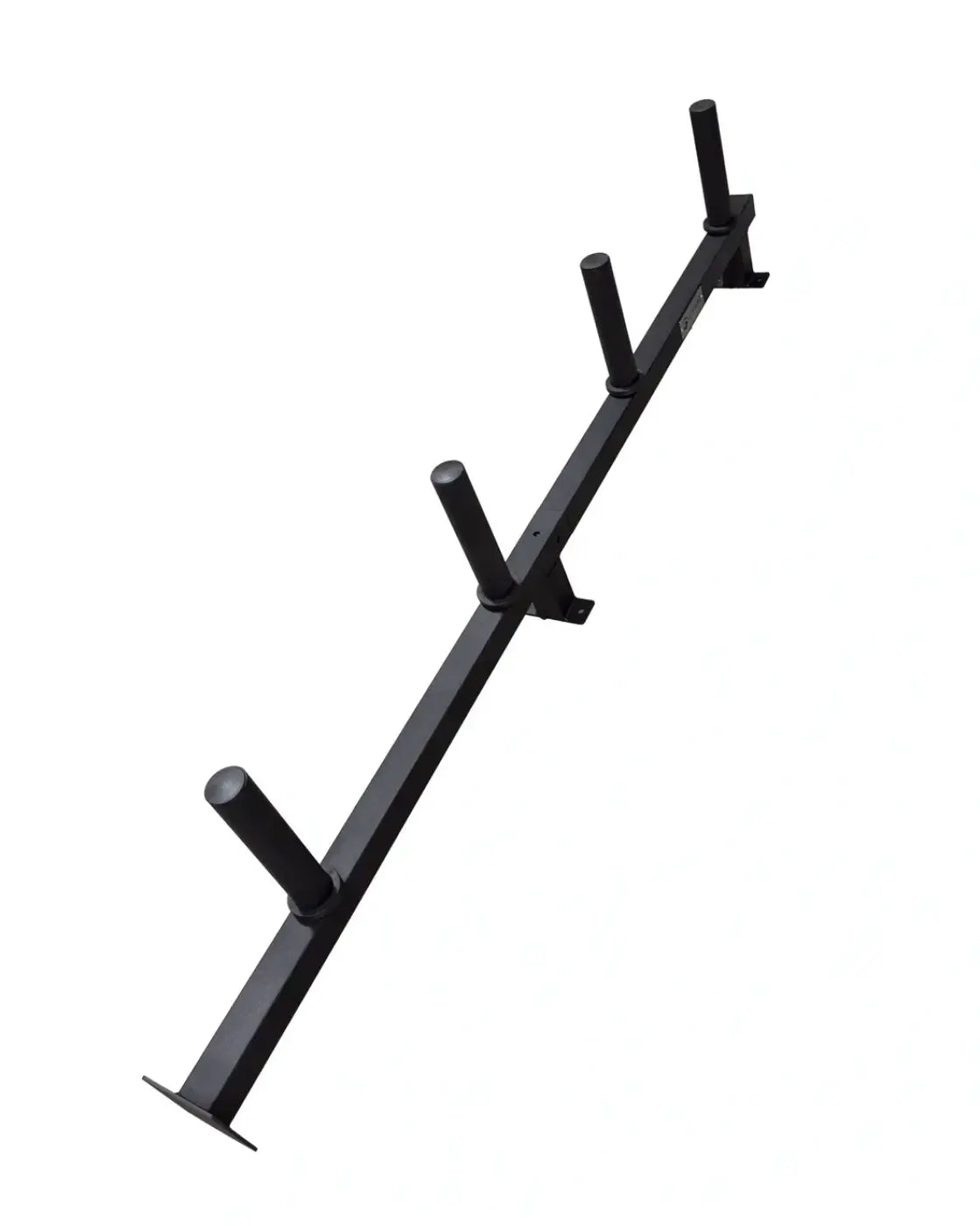
Four wall-mounted pegs
Gym Gear Olympic Plate Wall Rack (4 Horns)
Gym Gear gives a 23 cm horn depth. The usable length, load rating and wall-fixing requirements are unpublished.
Specifications, source links and outstanding checks in the full profile.
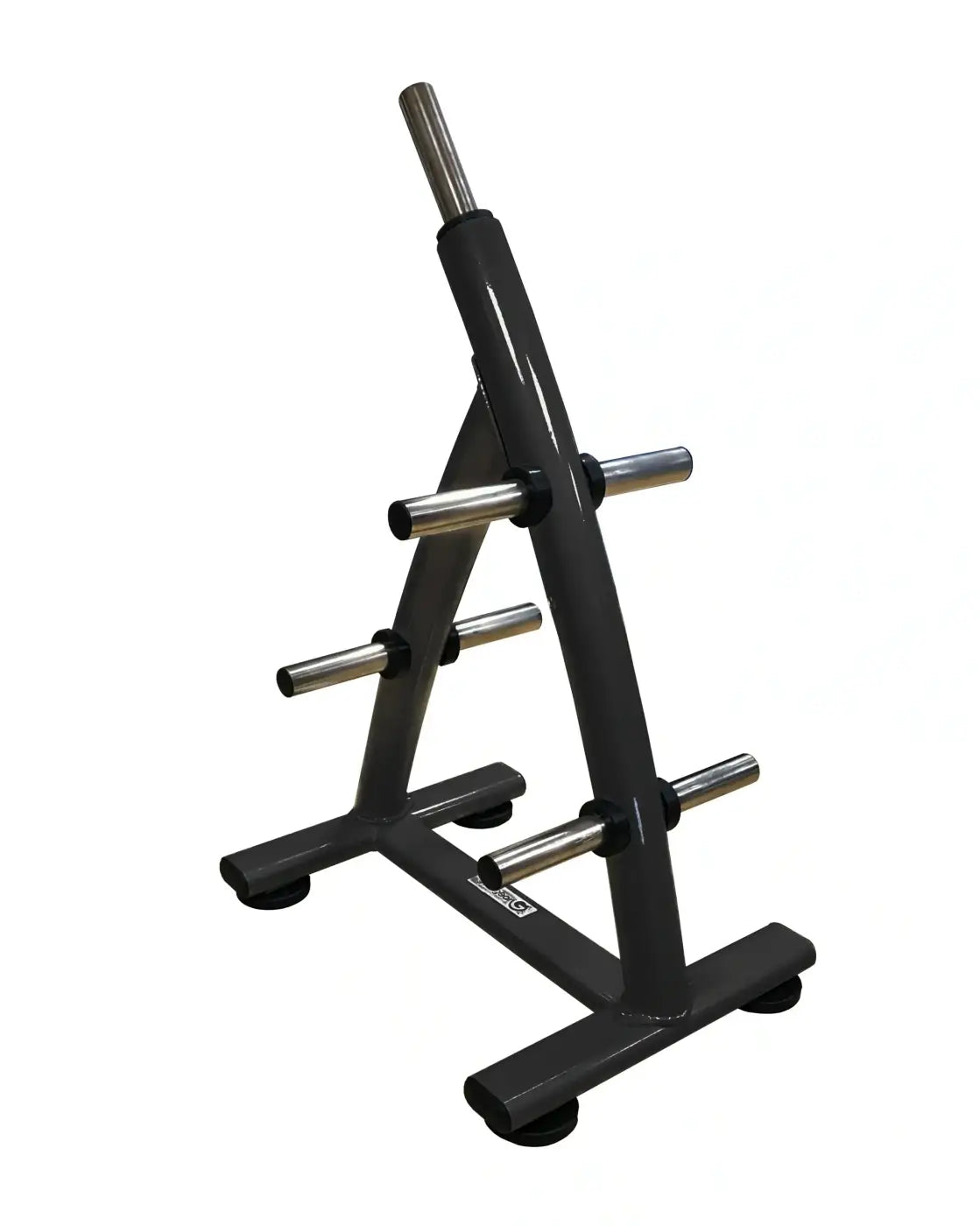
Seven freestanding pegs
Gym Gear Olympic Plate Rack (7 Horns)
The maker describes storage for Olympic plates from 1.25 to 25 kg and leaves the per-peg and total load ratings unpublished.
Specifications, source links and outstanding checks in the full profile.
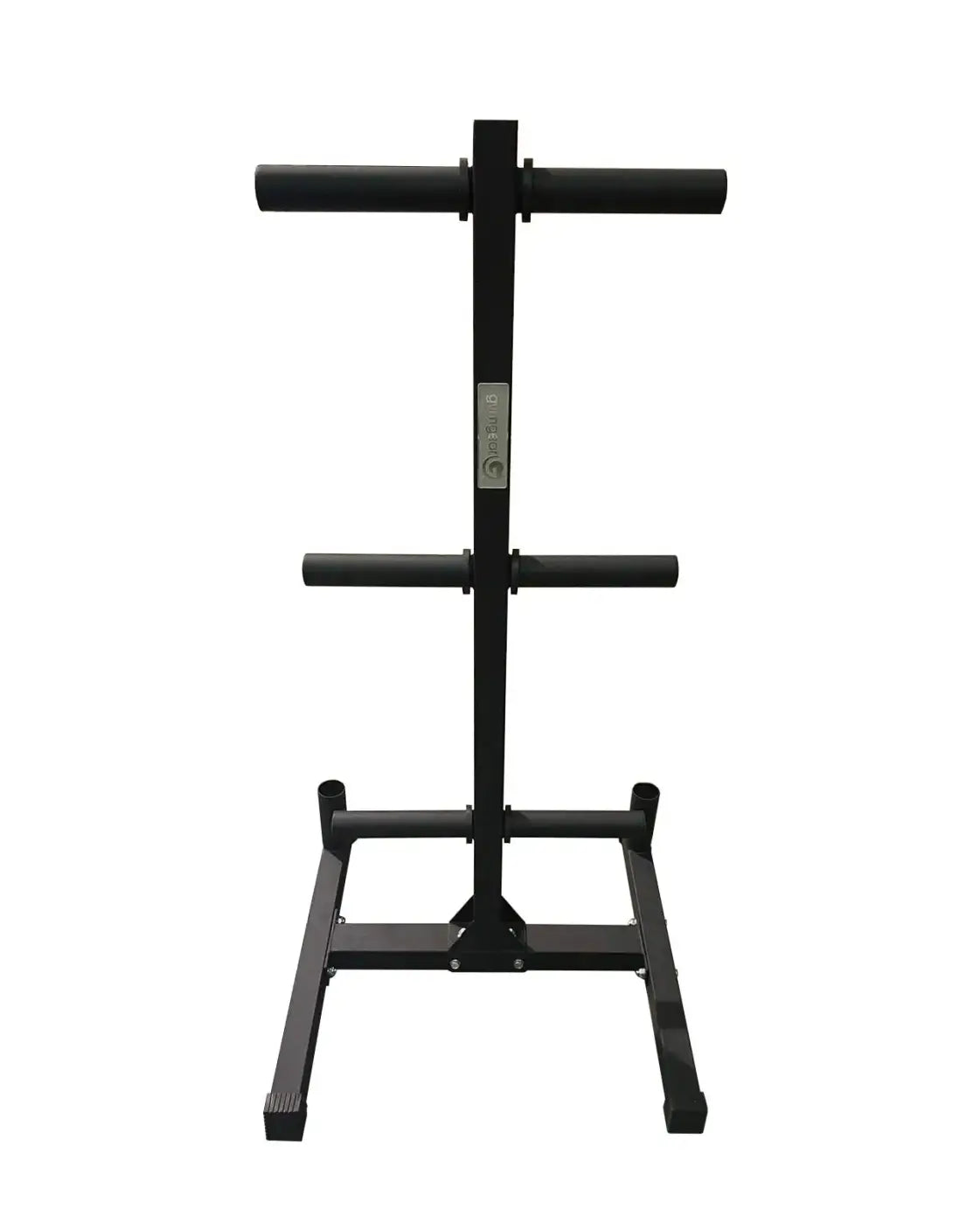
Holder only; plates and bars are not included. Plates and two vertical bars
Gym Gear Olympic Plate and Bar Holder
This holder has six plate pegs and two bar supports. Its assembled height remains unclear, so overhead fit needs confirmation.
Specifications, source links and outstanding checks in the full profile.
Conclusion
The most useful rack is the one that puts the plates where they can be reached and returned easily. Peg fit, space between stacks and a defined load capacity matter as much as the number of pegs.
The room usually settles the choice between a wall rack, a floor rack and a combined holder. A workable position allows for the loaded footprint and the path each plate or bar takes out of storage.
Sources
Primary references used for factual claims in this guide. Product specifications apply to the named model and version.
- Gym Gear Olympic Plate Wall Rack (4 Horns): product specifications
Gym Gear. Accessed 9 Oct 2026.
- Gym Gear Olympic Plate Rack (7 Horns): product specifications
Gym Gear. Accessed 15 Oct 2026.
- Gym Gear Olympic Plate and Bar Holder: product specifications
Gym Gear. Accessed 21 Oct 2026.
- Exact-model maker Download Spec sheet
Gym Gear. Accessed 21 Oct 2026.