
Essential Equipment Checklist for a First Home Gym
Start with the equipment required by your programme, room and installation. Most people do not need every category at once.
By IRONINDEX · How we research
Introduction
There is no universal first-home-gym list. A barbell programme, dumbbell programme and indoor-cycling plan need different equipment.
Use this checklist to identify prerequisites for your chosen training, then check room measurements, installation and capacity before buying.
What to consider
- 01
Buy in order, not all at once
Start with the items that cover the most movements, then add specialist pieces once you know what your training actually needs.
- 02
Safety items aren't optional
If you're training alone with a barbell, a way to fail a rep safely belongs near the top of the list, not the bottom.
- 03
Match equipment to your space
Everything on this list needs checking against your actual room dimensions and ceiling height before you buy it.
- 04
Flooring and fixings
Flooring, wall or floor fixings and delivery can add noticeably to the cost. Including them in the budget from the start avoids surprises.
Buying advice
The core essentials
A written programme, or a clear list of exercises, is the best starting point. The equipment to buy first is the resistance and support those exercises need.
A bench is useful for programmes with supported presses or rows, but not every programme needs one. Its brand should permit each use you have in mind.
Flooring is best chosen by its documented material, installation and permitted use. It can reduce wear without proving structural capacity or sound insulation.
If you're using a barbell
A rack or stands needs to permit the lifts you plan, with the approved safety system fitted. Correct setup and use matter most when you train alone.
You'll also need a barbell rated for the loads you plan to lift, and enough plates to progress for a good while before you need more.
Collars keep plates secured on the bar. They're easy to forget, but cheap and important.
Worth adding early
A pull-up bar, whether doorway-mounted, wall-mounted or built into a rack, covers an entire category of pulling movements that's otherwise hard to replicate.
Resistance bands are cheap, take up almost no space, and are useful for warm-ups, mobility work and assistance exercises.
A yoga or exercise mat for floor-based core and mobility work, separate from your main lifting platform if you have one.
Add once you know you need them
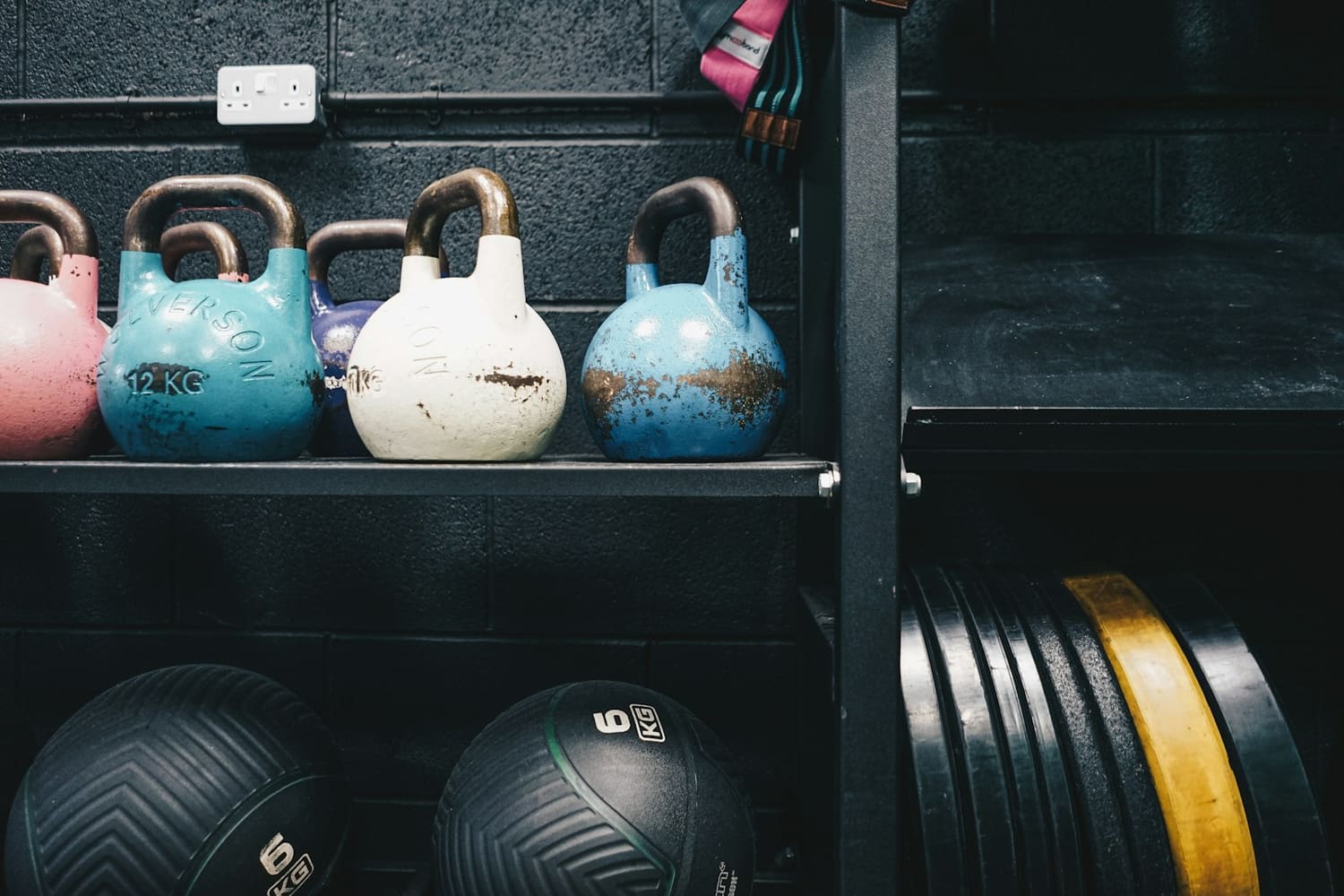
Kettlebells, a dip station, a cable machine or functional trainer, and cardio equipment are all genuinely useful, but they're easier to choose well once you've been training for a while and know what's actually missing from your sessions.
It's generally cheaper and less wasteful to add these gradually than to guess upfront and end up with equipment gathering dust.
Conclusion
A first home gym needs only the equipment your programme calls for, plus the flooring and safety items that go with it. For barbell training alone, a way to fail a rep safely belongs near the top of the list.
Checking each item against your room, installation and safe-use instructions before buying keeps the first purchase focused. Extras such as kettlebells, cables or cardio machines are easier to choose well once you know what your sessions are missing.
Related guides
Home Gym
3 min read
How to Build a Home Gym on a Budget
Prioritise the equipment your programme needs and compare the complete cost. A used purchase needs checks on identity, condition and missing parts too.
Dumbbells
3 min read
Adjustable Dumbbells vs Fixed Dumbbells
Adjustable dumbbells cover several loads in one pair. Fixed pairs provide one load per hand, with storage needs growing as you add more weights.