
How to Build a Home Gym on a Budget
Prioritise the equipment your programme needs and compare the complete cost. A used purchase needs checks on identity, condition and missing parts too.
By IRONINDEX · How we research
Introduction
A limited budget makes the order of purchase important. Start from the exercises you intend to do, the room you have and the amount you can spend, including delivery and flooring.
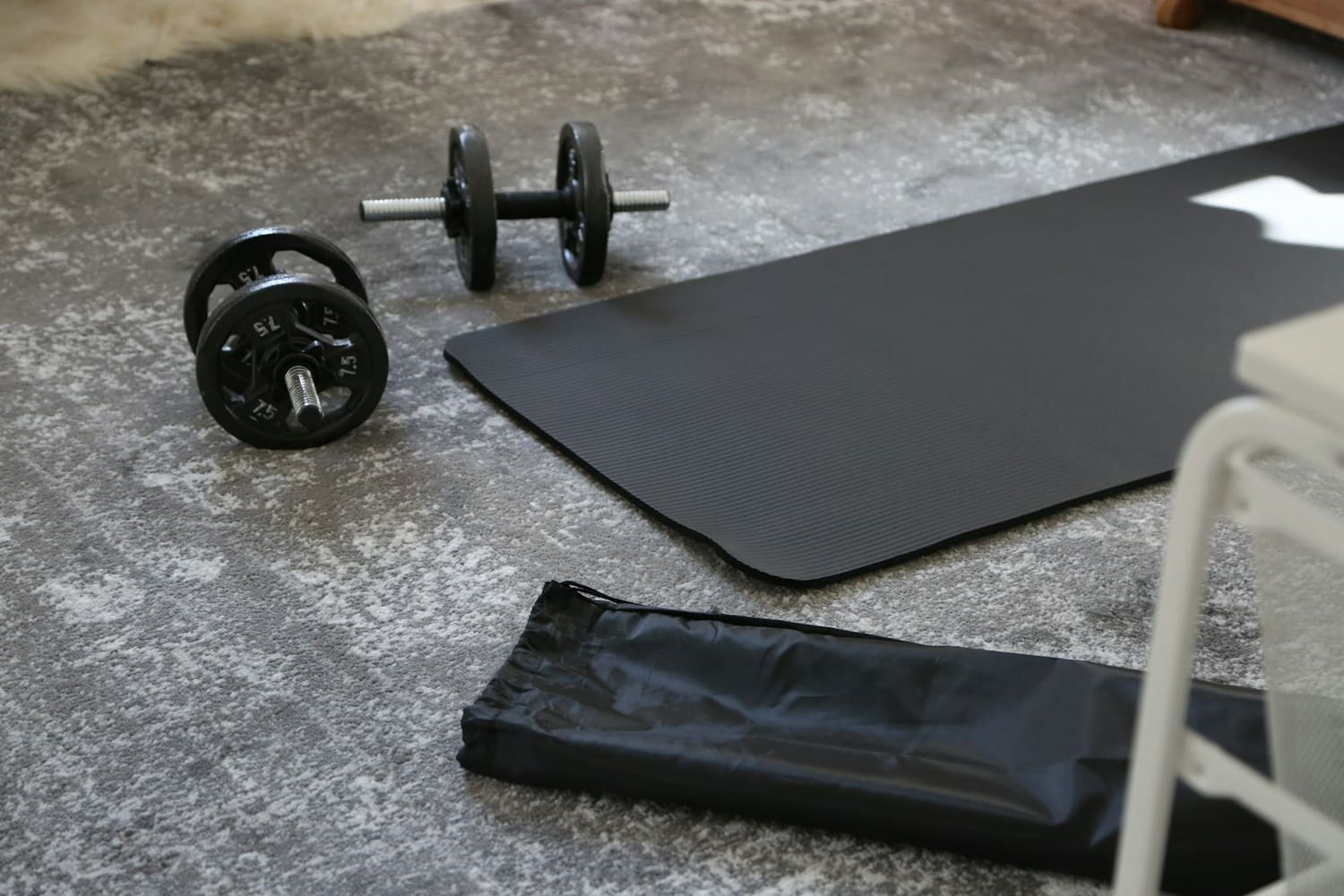
Buy the smallest setup that supports your current programme, then add equipment when a specific limitation appears. Used equipment can reduce the cost, but condition and replacement parts matter more than age alone.
What to consider
- 01
Versatility per pound
A barbell, plates and a rack let you squat, bench, press, deadlift and row. Few other purchases cover that much ground for the money.
- 02
What you'll outgrow
Check the available increments and maximum load against the exercises you plan to perform. A low maximum or large jump between settings can become limiting.
- 03
Space you actually have
Measure before you buy. A great deal on a rack is no deal if it won't fit under your ceiling.
- 04
Safety isn't optional
For any lift that can trap the user under a bar, follow the programme and equipment instructions for spotting, safeties and an exit from a failed repetition.
Buying advice
Buy in this order
If strength training is the goal, the core is a rack (or squat stands with safeties), a barbell, plates and a flat bench. That combination handles almost every major lift.
If you're short on space or cash, a pair of adjustable dumbbells and a sturdy bench is a solid starting point instead. You'll hit a ceiling on leg training eventually, but it covers a lot.
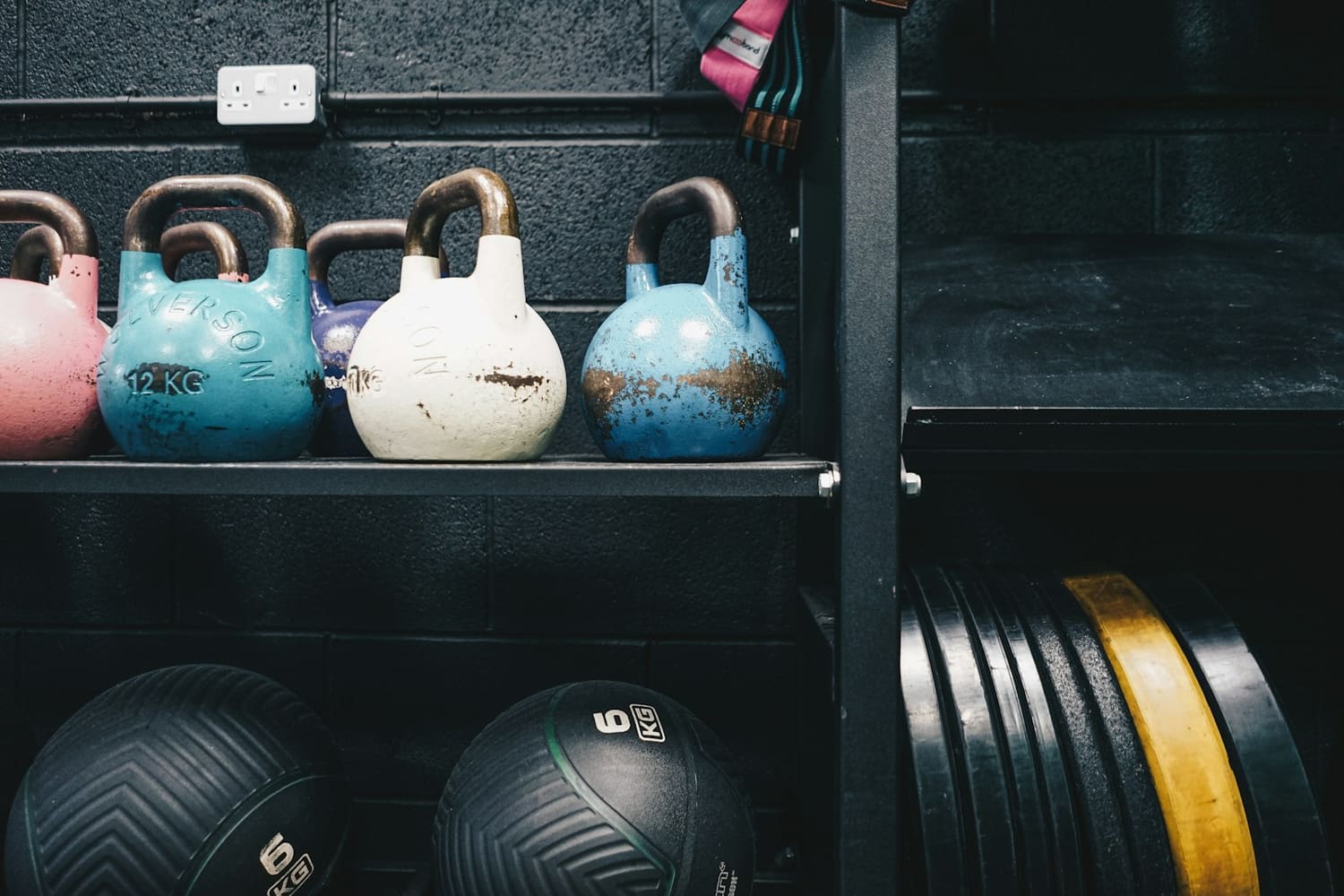
Flooring, clearances and any required fixings are worth planning before heavy equipment arrives. Pull-up bars, cables, kettlebells and cardio equipment earn their place once they serve a specific part of your training.
Second-hand is where the savings are
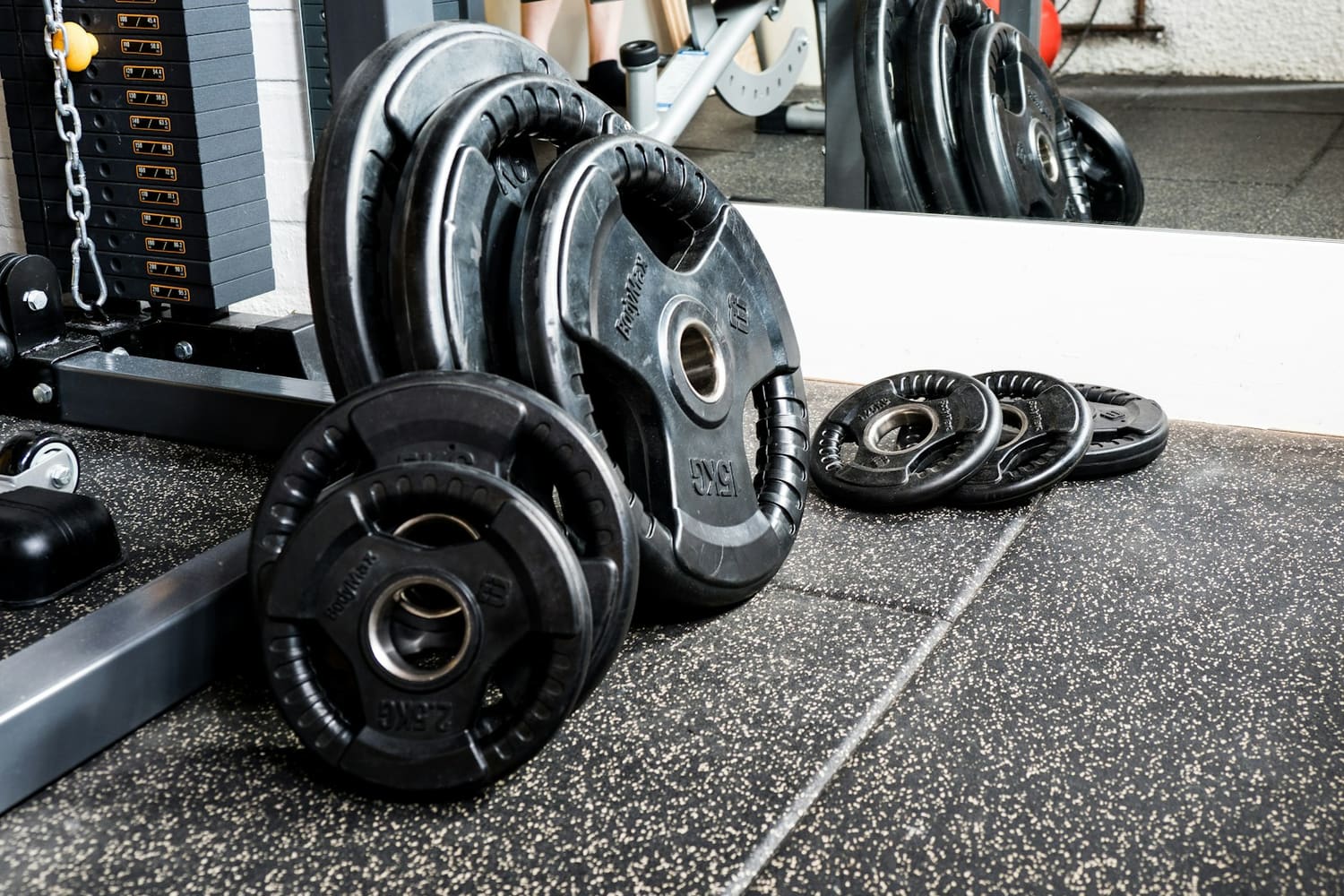
Simple iron plates and fixed dumbbells have few moving parts, but they can still be cracked, badly corroded or outside their stated weight tolerance. They're worth inspecting before paying, and the brand's care instructions for the finish still apply.
For a used barbell, bench or rack, the exact model and its manual are worth tracking down. Unauthorised modifications, missing hardware, damaged welds, bent parts and mechanisms that don't move properly are the main things to look for.
A visual check can't reveal hidden damage. Equipment whose history or condition leaves you unsure about using it under load is better left.
Where not to cut corners
Capacity figures need reading carefully. A bench may combine user and external load, and a barbell's tensile strength is a property of the steel rather than a simple safe working load.
An adjustable bench with lots of play in its joints is worth avoiding, whatever the saving. A bench that shifts under you when you're pressing is uncomfortable at best.
Easy ways to save
Comparing total delivered cost and usable sleeve space gives a truer picture than the price of one plate. Iron and bumper plates differ by model, dimensions and permitted handling.
Flooring is best compared by material, thickness, intended use and installation instructions. Agricultural mats aren't automatically specified for indoor exercise spaces, so the product documentation matters more than the label.
Bundles padded out with accessories you won't use aren't a saving. Buying pieces separately often gives you better quality where it matters.
Conclusion
On a budget, the order of purchase matters most: the equipment your programme needs first, with flooring and delivery included in the price, and extras only when a real need appears.
Used equipment can stretch the budget a long way, as long as its identity, condition and completeness are clear. The places not to save are the ones that affect safety, such as a bench that shifts under load.
Related guides
Home Gym
3 min read
How to Plan a Home Gym Before Buying Anything
A short plan covering training, space, installation, storage and total spending makes it easier to buy the right equipment first time.
Home Gym
3 min read
Buying Used Gym Equipment: What to Check Before Paying
Check identity, history, recalls, missing parts and collection costs before deciding whether a used listing is worth pursuing.
Dumbbells
3 min read
Adjustable Dumbbells vs Fixed Dumbbells
Adjustable dumbbells cover several loads in one pair. Fixed pairs provide one load per hand, with storage needs growing as you add more weights.
3 min read
Rubber Sheets vs Interlocking Gym Tiles
Sheets and tiles describe the format, not the material. Compare the exact flooring's construction, installation and permitted use.
Home Gym
3 min read
Essential Equipment Checklist for a First Home Gym
Start with the equipment required by your programme, room and installation. Most people do not need every category at once.