
Rubber Sheets vs Interlocking Gym Tiles
Sheets and tiles describe the format, not the material. Compare the exact flooring's construction, installation and permitted use.
By IRONINDEX · How we research
Introduction
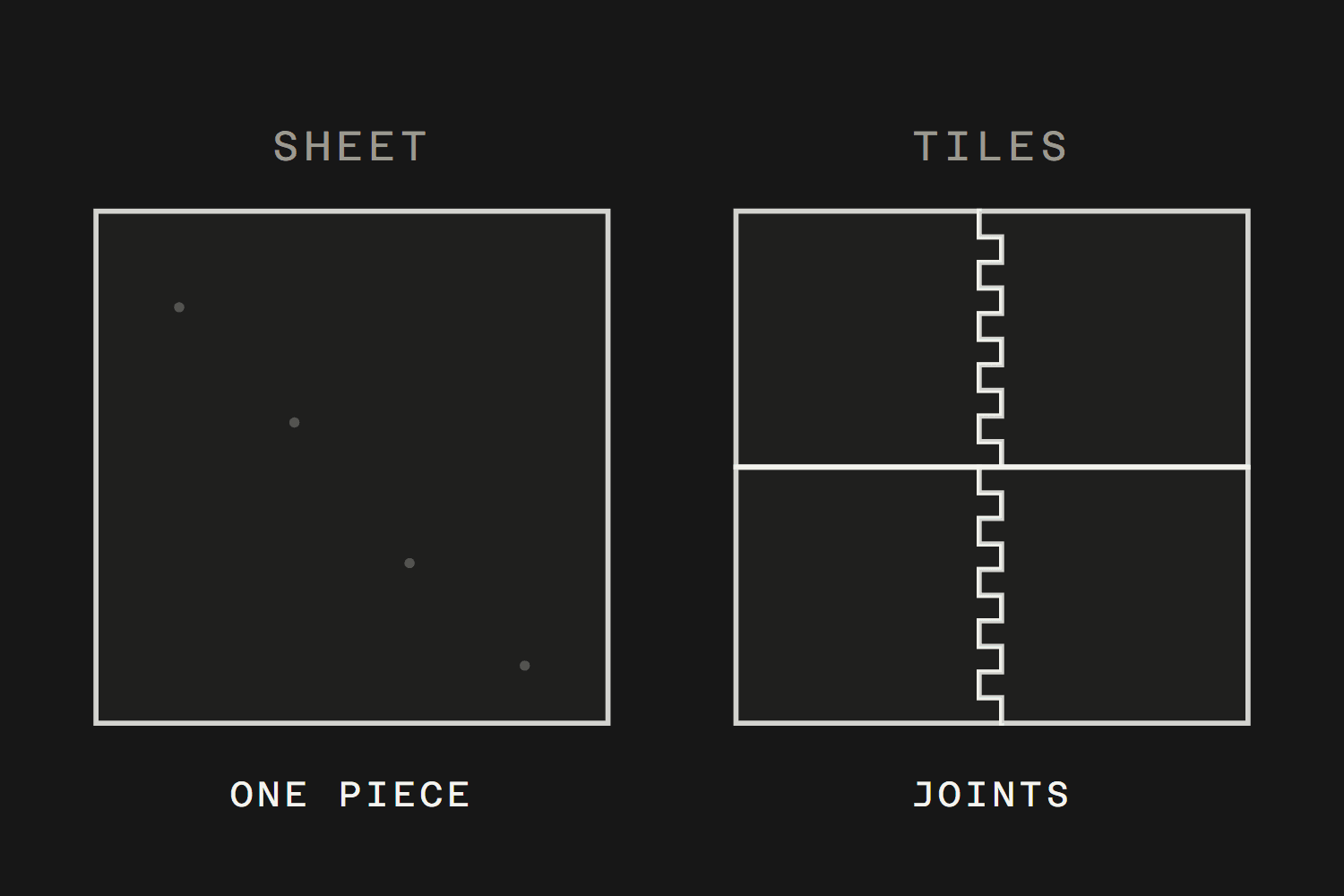
Sheets and tiles describe the format of a floor, not what it's made of. A rubber sheet, a rubber tile and an EVA foam puzzle tile can all be sold as gym flooring while being very different products, each with its own installation and handling needs. Interlocking describes how tiles join, not how well they protect.
The useful comparison is between exact products: their material, density, thickness, joining method, installation and the use their brand describes. No gym-labelled surface is approved for dropping loaded equipment unless its brand says so.
What to consider
- 01
Weight and drops
The brand's permitted use and installation decide what a floor can take. Thickness alone doesn't show how it copes with a loaded impact.
- 02
Seams and gaps
Interlocking tiles have visible seams that can open up over time, especially under repeated heavy loading in the same spot.
- 03
Installation and moving house
Tiles are modular and easy to lift and reuse elsewhere. Large mats are heavier to move but leave fewer gaps once laid.
- 04
Coverage shape
Tiles are easier to fit around awkward room shapes and pillars. Mats are better suited to a simple rectangular footprint.
Buying advice
Large rubber mats
Large sheets have fewer joints and can simplify coverage beneath a rack. Their suitability for concentrated loads or dropped weights depends on the specified product and the floor assembly beneath it.
The downside is weight and cost per square metre. A big roll or sheet is awkward for one person to install alone, and off-cuts to fit an odd-shaped room are wasteful.
Interlocking tiles
Modular tiles can fit around corners or pillars and allow damaged pieces to be replaced where the brand permits it. Tile weight and joined coverage are worth checking, since a tile's size with its joining teeth, without them and the area it actually covers can all differ.
For any loaded impact, the tile brand's specification for that use and installation is what to look for. Foam puzzle tiles and dense rubber tiles aren't equivalent products.
A common compromise
Many home gyms mix the two: thick mats or a dedicated platform under the rack and barbell, with cheaper interlocking tiles covering the rest of the room for general floor protection and comfort.
Whichever format you choose, the brand's installation and permitted-use instructions apply. A flooring layer doesn't change the structural capacity of the floor below it.
Conclusion
Sheets and tiles differ mainly in joints, handling and how easily they fit a room. Neither format tells you how well a floor protects against dropped weights or noise; that depends on the exact product and what's underneath.
Flooring whose brand describes the use you have in mind, such as free weights or a rack, is the reliable choice. Many home gyms combine a thicker surface under the rack with lighter tiles elsewhere.
Shortlists
Products in our index that meet one stated rule, checked against published specifications. Each list is ordered by name, not ranked, and links to retailers.
Shortlist · Accessories
Interlocking gym flooring
7 of 10 floors qualify
- Gym Gear 20mm Premium Black Rubber Tile (Grey Fleck), 1 m × 0.5 mUnder £50
- Gym Gear 30 mm Green Sled Track Turf Tile, one white line£50 to £100
- Gym Gear 30 mm Green Sled Track Turf Tile, two white lines£50 to £100
- and 4 more
Shortlist · Accessories
Rubber gym flooring 20 mm or thinner
6 of 10 floors qualify
- Gym Gear 15mm EPDM Premium Black Rubber Tile, 1 m × 1 mUnder £50
- Gym Gear 20mm Premium Black Rubber Tile (Grey Fleck), 1 m × 0.5 mUnder £50
- BodyMax Commercial Rubber Gym Mat, 180 × 120 cm × 10 mm£50 to £100
- and 3 more
Related guides

Home Gym
3 min read
How to Clean Rubber Gym Flooring
Match the cleaner, equipment and drying method to the floor you own. A routine for one rubber surface is not a recipe for every tile or roll.
Home Gym
3 min read
How to Build a Home Gym on a Budget
Prioritise the equipment your programme needs and compare the complete cost. A used purchase needs checks on identity, condition and missing parts too.
Home Gym
3 min read
How to Reduce Home Gym Noise and Vibration
Start with the source of the noise and how it reaches adjoining rooms. Surface foam alone does not establish sound insulation.